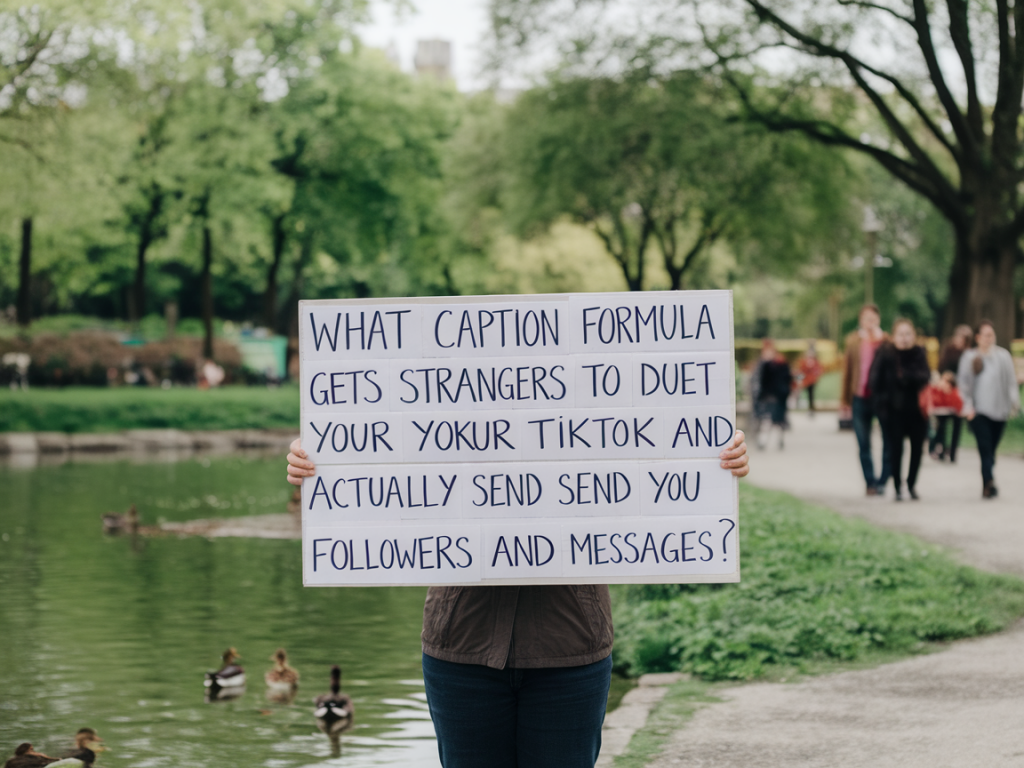
When I first started testing TikTok caption experiments, I thought getting strangers to duet my videos was mostly luck. Then I realized there's a repeatable formula — a mix of curiosity, clear instruction, emotional sparks, and the right amount of brag-temptation. Over dozens of small experiments (and a few viral hits that taught me more than any guide ever could), I’ve distilled a few caption patterns that actually make strangers duet, follow, and slide into my DMs.
Why captions matter more than you think
People often focus on the video itself — the hook, the sound, the edit — and forget that the caption is the handshake that convinces a passerby to interact. A good caption does three things at once:
When those three align, you transform a passive viewer into an active collaborator. And when collaboration happens, you're not just getting a duet — you're getting exposure to that creator’s audience, followers, and often messages.
The caption formula I use (and why it works)
The core structure I lean on looks like this:
Let me break that down with examples and the psychology behind each piece.
Invitation: make it obvious you want a duet
Start by explicitly inviting people. I know it sounds basic, but people need permission. Phrases that work for me include:
Why it works: Direct invitations reduce decision friction. If a user is on the fence, a simple “duet this” often pushes them over.
Constraint: give them a clear, bite-sized task
Successful duet captions don't ask for broad creativity; they give a narrow prompt. Constraints make participation easy. Try lines like:
Why it works: The brain loves simple tasks. When you specify a tiny creative box, more people will try it because it feels achievable — and the quicker they can create, the more likely they are to follow through.
Value: promise an emotional payoff
People duet to get something — attention, validation, laughs, or community. Your caption should hint at that payoff.
Why it works: Offering a prize (even a tiny one like a follow, a shoutout, or a pinned comment) turns participation into a low-effort gamble with a high perceived upside.
CTA: be specific about the next step
End with a crystal-clear call-to-action. Not every caption needs a long CTA; sometimes "Duet this" is enough. But if you want followers or messages, say so:
Why it works: People are lazy (myself included). If you tell them exactly how to get noticed, they will do it. Saying "comment 'sent' so I can DM you" creates a simple traceable action that you can use to build a list of engaged folks.
Putting it together: caption templates that consistently work
Here are several caption templates I tested that regularly bring duets and messages. Customize them to your niche and voice.
Small tweaks to tone matter. If your audience likes playful vibes, use humor. If it’s more niche or professional, emphasize skill or credibility (e.g., "Duet with your best 10-second tip — I'll save the top 5").
How to convert duets into followers and messages
Getting duets is step one. Turning them into followers and DMs requires follow-through:
What I learned the hard way
My early captions were either too vague or too needy — "Please duet?" doesn't work. Also, offering big prizes you can't afford to deliver backfires. A shoutout or a personal comment is often more valuable than a vague promise of "feature".
One surprising lesson: sometimes silence is powerful. Not every duet needs to be immediately replied to with a duet from me. Highlighting community duets in a compilation makes the community do the promoting for you.
Tools and tricks I use
If you're into experimenting, use UGC-friendly brands like Rode mics or Zhiyun stabilizers in your filming — little production upgrades make your prompts feel worth responding to. But don’t over-invest before validating that your caption formula works for your audience.
Ready to test it? Pick one of the templates above, post a short, clear video, and give yourself a week of consistent follow-up. Track which captions get the most duets, which duets converted to follows, and which resulted in messages. Tweak the constraint and the reward until the numbers start to climb — that’s where the magic hides.