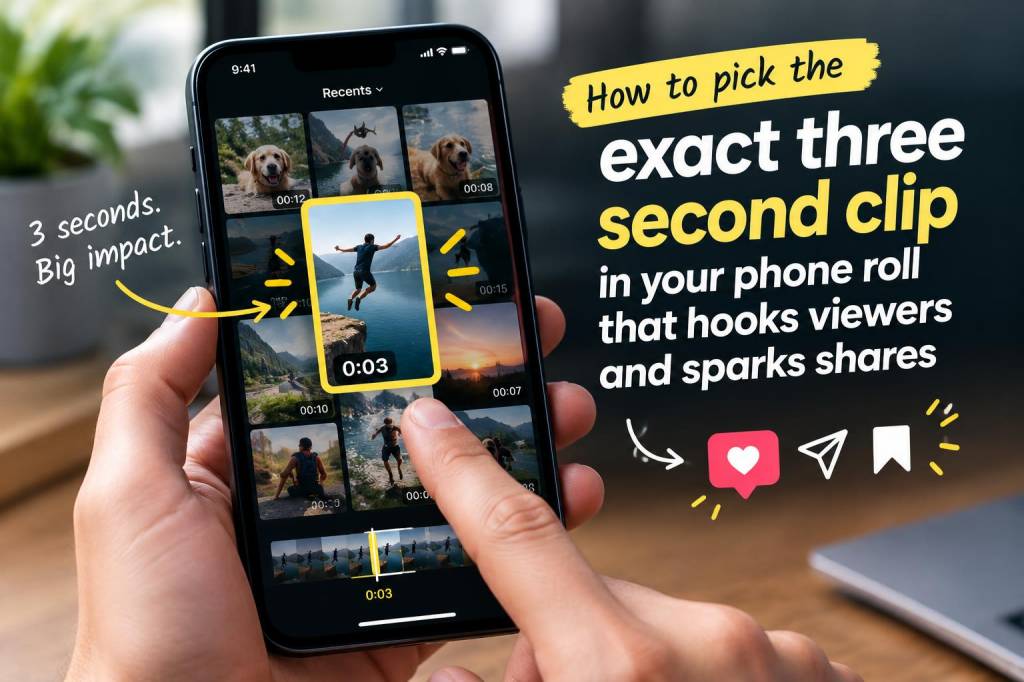
I have a weird superpower: I can usually spot the exact three seconds in a phone roll that will make people stop scrolling. It’s a tiny window, but it’s where attention lives — the moment that turns casual viewers into sharers. Over the years curating viral videos for Wiralclub, I’ve learned that finding that snippet is less about luck and more about a blend of instinct, simple rules, and a handful of practical tricks you can apply right now on your phone.
Why three seconds matters
On platforms like TikTok, Instagram Reels, and YouTube Shorts, people decide whether to stay in a fraction of a second. Many creators call it the “hook,” but I like to think of it as the emotional elevator pitch: in three seconds you either intrigue, delight, or surprise someone enough that they’re willing to hear the rest. If you nail those three seconds, you get longer watch time, rewatches, comments, and—best of all—shares.
How I hunt the perfect three-second clip in my roll
Here’s the exact process I use when I’m scrolling through a camera roll full of raw footage and need to extract that viral-ready snippet fast.
- Scan for emotion first. Look for faces, reactions, or movement that show a clear feeling: joy, shock, confusion, triumph. Emotion reads instantly even in a tiny frame.
- Zoom to thumbnails. I scrub quickly and watch thumbnails at high speed. The moment a thumbnail shows a peak expression or an unexpected action, I pause and mark that timestamp.
- Listen for sound cues. Even if you plan to mute, the original audio often contains timing beats—gasps, bangs, punchlines—that help pin the exact frame where interest spikes.
- Look for the micro-story. The best three-second clips imply a before and after. If a frame makes me think “Wait, what happened next?” it’s a winner.
- Trust the reaction shot. Sometimes the person watching is the hero. Reaction shots can be more clickable than the action itself.
Quick mental checklist before you cut
Run the following checklist in your head when you’ve paused on a possible clip. I keep this list memorized and it speeds everything up.
| Question | Why it matters |
|---|---|
| Is the image instantly readable? | Clarity beats cleverness in the first three seconds. |
| Does it provoke curiosity? | Curiosity increases rewatches and comments. |
| Is there a strong emotional cue? | Emotion is universal and fast to process. |
| Can it stand alone without context? | Standalone clips are more shareable across audiences. |
| Will it look good as a thumbnail? | Thumbnails are still clickable gateways on many platforms. |
Framing, motion and timing — the nuts and bolts
Once I’ve flagged a moment, I fine-tune it. Small framing and timing adjustments make a huge difference.
- Crop for focus. Remove distractions. If a face or object is the hook, crop tight so it fills the frame and reads on tiny screens.
- Match the beat. Trim so the three seconds start just before the main action and end right after the reaction. Starting too early dilutes impact; ending too late wastes precious attention.
- Use micro-movements. A hair flip, a hand slap, an eyebrow raise — these are excellent visual anchors. If you have movement that shifts the scene, try to include it.
- Consider speed ramping. A subtle slow-mo or speed-up for 0.5–1s can emphasize the moment without feeling gimmicky. Tools like CapCut and Adobe Premiere Rush make this easy on mobile.
Sound matters — even if people often watch muted
I always treat sound like a secret weapon. If viewers are on mute (which many are), the clip must work visually. But if there’s a sound cue that elevates the moment—a punchline, a squeak, a gasp—keep it and amplify it slightly. If the audio is weak, layer in a foley or beat that syncs with the moment. A good royalty-free SFX can transform “nice” into “shareable.”
Thumbnail and first frame — tiny design choices with big results
The first frame is the thumbnail on many platforms. Pick or set a frame that:
- Has a clear facial expression or action
- Includes contrasting colors to pop on the feed
- Contains minimal text (if any) — bold, short and readable
I often create a custom thumbnail in Canva when I’m posting to YouTube or Instagram because it gives me exact control over the moment people see before they tap.
Platform-specific tweaks
Every platform has its quirks. I tweak my three-second clip depending on where it’s going:
- TikTok: Go raw and authentic. Keep the first second ambiguous but intriguing. Use native sounds to ride trends.
- Instagram Reels: Make it visually crisp—thumbnails here can be custom. Add text hooks that appear after the first second.
- YouTube Shorts: A compelling thumbnail still helps; captions are higher value here because Shorts viewers often land from search.
Tools I use on my phone (and why)
I edit on the go and prefer apps that are fast and forgiving:
- CapCut — my go-to for quick trims, speed ramps, and syncing SFX. It’s fast and has smart features.
- InShot — great for easy cropping, background blur, and batch exporting different aspect ratios.
- Adobe Premiere Rush — when I want slightly more polish without leaving my phone.
- Canva — for thumbnails and quick overlays.
Testing, analyzing, and iterating
Even when I’m confident, I rarely publish a clip without a tiny test. I’ll post similar cuts to a small group or as part of a carousel and watch engagement. If a clip gets a lot of rewatches but few shares, I’ll try adding an obvious call-to-action in the caption or a bold thumbnail. If views are low, I go back and test a different start point — often it’s just 0.5–1 second off.
Copy and caption — the invisible hook
Your three-second visual opens the door, but the caption can nudge people across the threshold. Use captions to:
- Ask a question that the clip hints at (“Can you believe this happened?”)
- Offer a tiny context that increases curiosity (“She thought it was broken…”)
- Include a share-friendly prompt (“Tag someone who’d freak out!”)
I write captions like snippets of gossip — short, punchy, and slightly mysterious.
My final tip: get ruthlessly selfish about the first three seconds
When in doubt, cut more. If a moment doesn’t hit the emotional or curiosity markers in those initial three seconds, it probably won’t work no matter how clever the rest of the clip is. Let the first three deliver, and the rest will follow.