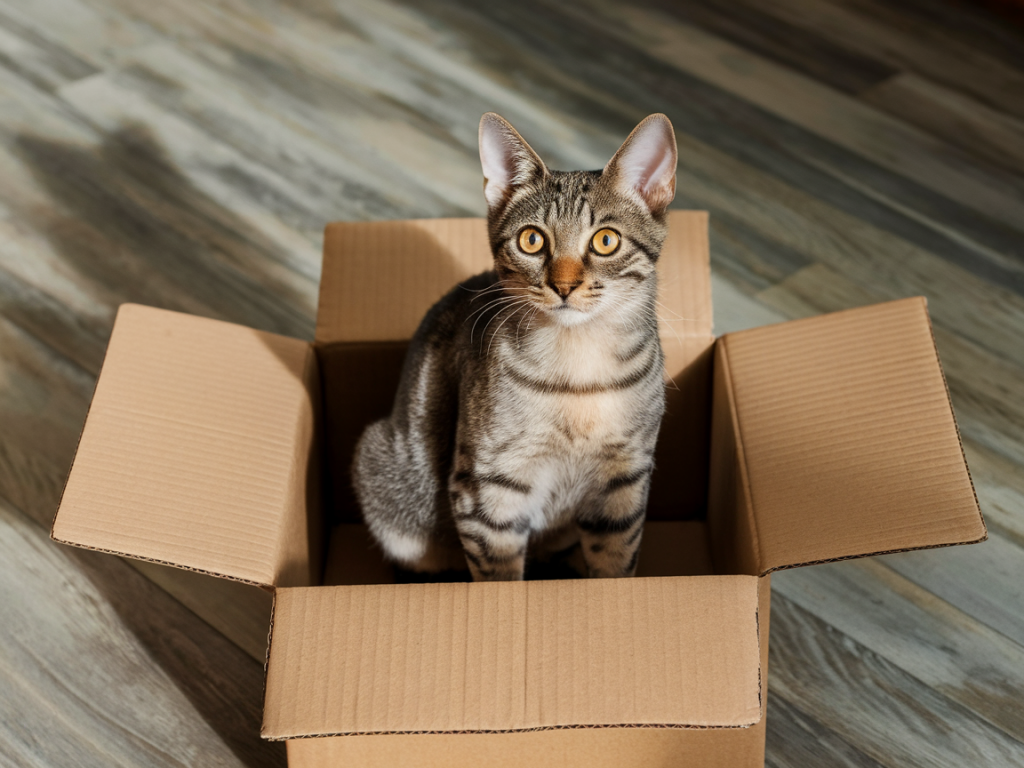
I have a confession: whenever a package arrives, I don’t rush for the gift — I rush for the box. Not because I need another storage solution, but because my cat, Pixel, has already claimed it. Over the years of sharing silly videos and small joys on Wiralclub, I’ve watched countless felines transform humble cardboard into castles, forts, and meditation pods. So I’ve become a bit of an amateur cat-box analyst — part fan, part scientist, and part mischief-maker. Here’s what I’ve learned about why cats adore boxes and five quirky, practical hacks to keep them happily entertained.
Why boxes are irresistible to cats
At first glance, a cardboard box is just a cheap rectangle. For cats, it’s a magic machine. Here are the main reasons behind the obsession — and yes, science backs most of them up.
- Security and comfort: Boxes offer a small, enclosed space where a cat can hide while still observing its surroundings. This feeling of safety reduces stress — study after study shows cats seek confined spaces when they’re anxious or need to rest.
- Warmth: Cardboard is an excellent insulator. A curled-up cat inside a box can conserve body heat more effectively than lying flat on a cold floor.
- Ambush and play: Cats are natural predators. A box provides the perfect stealth platform to pounce on toys, toes, or unsuspecting houseplants.
- Texture and scent: Cardboard has a satisfying texture for kneading and scratching, and it soaks up the cat’s scent. Once a box smells like them, it becomes a personalized sanctuary.
- Novelty: Cats are curious. A new box is instantly more interesting than a familiar couch, and that novelty triggers exploratory behavior.
Quick, quirky hacks I actually use at home
These are simple, usually inexpensive ideas I’ve tried with Pixel and recommended to friends who run into the same "box-shaped problem" every delivery day. Each hack is designed to elevate a plain box into a long-lasting source of amusement.
- Peekaboo windows: Use a small box and cut two or three holes on the sides at different heights (safety first: smooth the edges). Drop different toys through the holes or dangle a string. Pixel loves batting a toy that appears and disappears — it taps into that ambush instinct without the chaos of full-room chasing.
- Cardboard maze: Keep a few boxes and connect them with cut-out doorways to make a mini-maze. Tape them securely with painter’s tape and add a few treats in dead-end boxes to encourage exploration. It’s amazing how long a cat will investigate tunnels and intersections — and it’s fun to watch them problem-solve.
- Cozy heater bed: Line a small box with a fleece blanket or a microwavable heat pad made for pets (like those by K&H). The cardboard retains warmth, and the soft lining makes it irresistible for nap time. I rotate the box locations around the house to keep naps interesting.
- Interactive treat-station: Cut small flaps on the top of a box and hide treats inside. Tape the flaps loosely so they flip back up, and let your cat figure out how to nudge them open. This is a cheap puzzle feeder and it adds mental stimulation to snack time.
- Cat-TV viewing platform: Create a shallow platform by flattening a lid and propping it against a windowsill. Secure a small box at one end for the hide-and-seek vibe. Cats love watching birds and people from a slightly elevated, confined perch — this combines the best of both worlds.
Safety notes and tips to make the fun last
Before you unleash your inner crate designer, a few practical points:
- Remove tape with exposed staples and rough edges; smooth or cover any sharp parts.
- Never leave string, rubber bands, or small parts inside a box unsupervised — those are choking hazards.
- If you use glue or markers to decorate, choose pet-safe materials. I like simple washi tape for color because it’s removable and generally safe.
- Rotate boxes. Cats get bored of the same setup — a weekly switch-up makes an old box feel new again.
Mini comparison — box vs. fancy toys
| Feature | Cardboard box | Commercial toy (e.g., interactive laser, electronic mouse) |
|---|---|---|
| Cost | Free or very cheap | Often $10–$50 |
| Longevity | High novelty, moderate durability | Durable but can be ignored after novelty fades |
| Engagement type | Hiding, ambush, tactile | Predatory chase or puzzle-focused |
| Human involvement needed | Low — cats self-entertain | Varies — some need active playtime |
Bonus ideas to up the fun factor
If you want to get a little extra creative, try these small add-ons:
- Sprinkle a pinch of catnip inside (if your cat responds to it) or rub a silvervine stick for added excitement.
- Attach a wand toy to the outside so you can flick it through a hole and encourage interactive play from a distance.
- Use a shallow baking tray inside the box with a few dry rice or ping-pong balls for a rustling, rolling toy experience. (Supervise to prevent ingestion.)
- Place the box near a heat source in winter — the combination of warmth + enclosure is unbeatable.
Ultimately, my philosophy is simple: the best cat enrichment doesn’t need to be expensive or complicated. A little cardboard, some imagination, and a willingness to embrace mess are often all it takes to make a cat’s day — and give you a new set of adorable videos for Wiralclub. If you try any of these hacks, send a clip or tell me which one Pixel-inspired you to build next.